
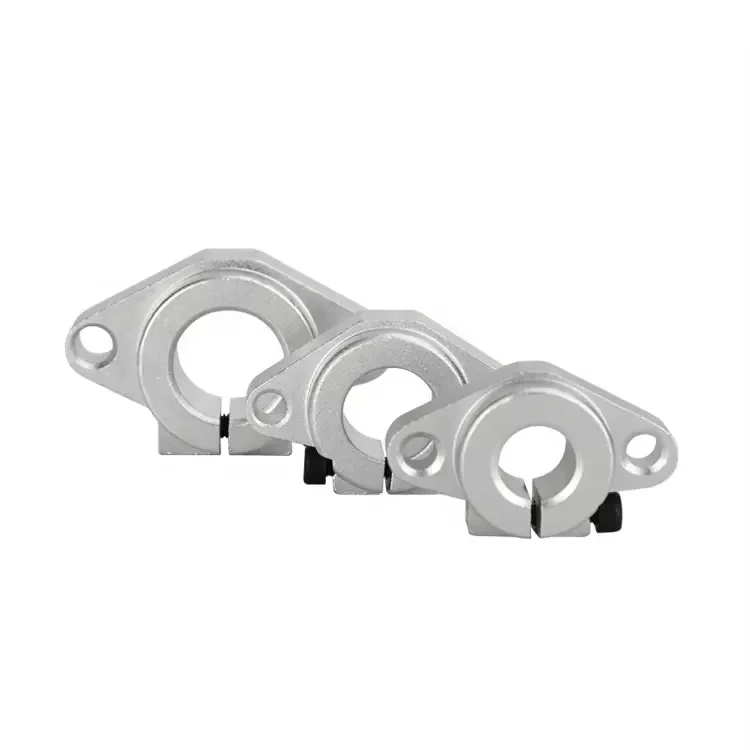
SHF Flange Shaft Support, SHF8 to SHF50, Aluminium
Request pricing, MOQ and lead time for this product — we reply within 24 hours.
Geometry
| Models | SHF8 to SHF50 |
|---|---|
| Mounting | Flange with two or four bolt holes, model dependent |
| Bore | Matches the nominal shaft diameter |
| Clamping | Split bore with a clamp screw |
Supply conditions
| Material | Aluminium alloy |
|---|---|
| Finish | Anodised or as machined |
| Packing | Carton, parts bagged |
| Lead time | Confirmed at quotation |
Values above are the manufacturer's published figures for this series. Anything not listed — dynamic load rating, straightness, preload class — is confirmed against the drawing at RFQ.
Description
Overview
An SHF support is a flange bracket rather than a block. The flange bolts to a flat face, which can
be the top of a plate, the side of a frame, a wall or a bracket, and the shaft passes through the
bore and is clamped. That single change in mounting geometry is what makes it useful: the shaft can
run alongside a structure instead of on top of it.
Like the SK block, the model number follows the shaft diameter, and the bore is split so the shaft
can be set, checked and re-set without a press fit.
Key Features
· Models from SHF8 to SHF50, one per standard shaft diameter
· Aluminium alloy body keeps the mass down on moving frames
· Flange mounting to any flat face, including vertical faces and plate edges
· Split bore with a clamp screw for setting and re-setting the shaft
· Anodised or as-machined finish
· Pairs with the same shaft diameters as the SK range
Specifications
The parameter table above lists the published values. Bore, flange hole pattern and overall height
follow the model. Where the support is replacing an original, the hole pattern and the height are
the numbers to match, and both are worth checking against the machine before ordering.
Application
SHF supports are used where a shaft runs beside a frame: gantry and portal axes, side-mounted rails
on conveyors, camera and sensor rails on machine frames, laboratory rigs built from extruded
profile, and enclosures where the shaft has to sit against a wall. They are also used to add
intermediate support to a long shaft at a height the plate cannot provide.
On moving frames, the aluminium body is the practical choice, since every gram on the moving part
is accelerated on every stroke.
Installation & Maintenance
Bolt the flange to a flat face with the clamp screw loose, pass the shaft through, align it along its
length, then tighten the clamp. Check that the flange sits flat: a bracket bolted against a burr or
a weld seam will hold the shaft at an angle, and the misalignment appears as a tight spot partway
along the stroke.
Inspect the clamp screws and the flange bolts at each service. On a moving frame, vibration is what
loosens them first, and a support that has shifted takes the alignment of the whole axis with it.
On a frame built from extruded profile, check that the flange bolt heads clear the slot and that the
bracket is not sitting on the anodised corner radius rather than on the flat. A bracket that is only
partly seated will tighten down at an angle, and the shaft then runs out of parallel with the rail
it is meant to guide. Where the frame is welded rather than extruded, check the face for weld draw
before bolting: a flange cannot pull a bowed face flat without bending the shaft with it.
Package & Lead Time
Supports are bagged and cartoned. Lead time is confirmed at quotation, normally 5 to 15 days for
standard models. Minimum order is one piece.
Request a Quote
Send the shaft diameter, the model number you need and the mounting face you have, with the hole
pattern if it is an existing machine. If you are building from extruded profile, tell us the slot
series and we will confirm that the flange bolts fit it.
Related components
Detail images
Questions buyers ask about this item
When do I use an SHF instead of an SK?
When the shaft has to be fixed to a vertical face or to the edge of a plate rather than on top of it. The flange bolts through the face; the SK block sits on the face. The bore is the same in both cases.
How many bolts does the flange take?
It varies by model: the smaller sizes use two holes, the larger sizes four. The hole pattern for each model is fixed, so tell us the model and we confirm the pattern.
Is aluminium strong enough to hold a shaft?
For guiding loads, yes, and it keeps the mass down. Where the support carries a heavy shaft or takes vibration, the steel SK block is the more conservative choice.
Can these be used to fix a shaft along a wall or a machine frame?
Yes, that is their main advantage: the flange mounts to any flat face, so the shaft can run parallel to a frame instead of above it.
Related products
TEBAK Ball Spline, High Speed 10mm 13mm 16mm 20mm 25mm
TEBAK Precision SLT008–SLT016 Ball Spline, grade N,H,P
TEBAK Diameter 8mm 10mm 13mm 16mm Solid /hollow Custom
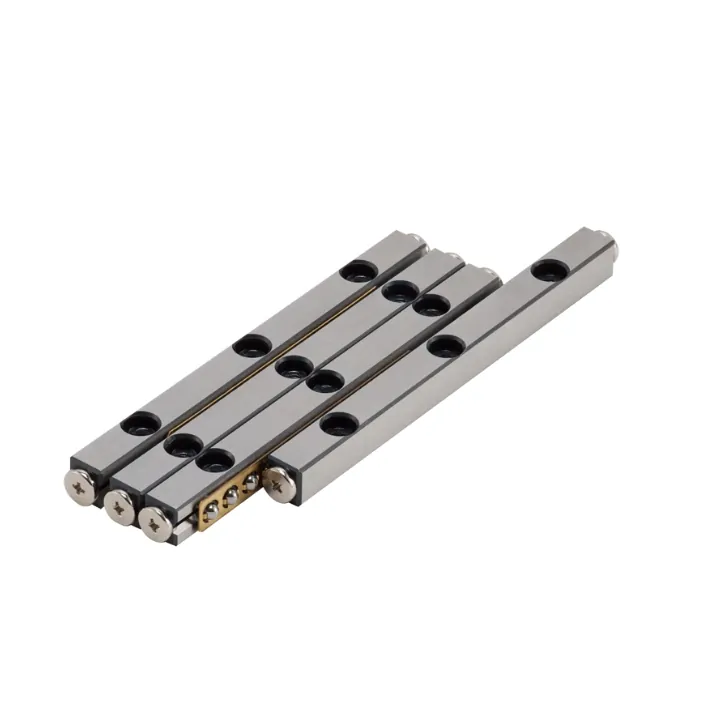
TEBAK Micron or Nanometer-level Positioning, grade H,P,SP
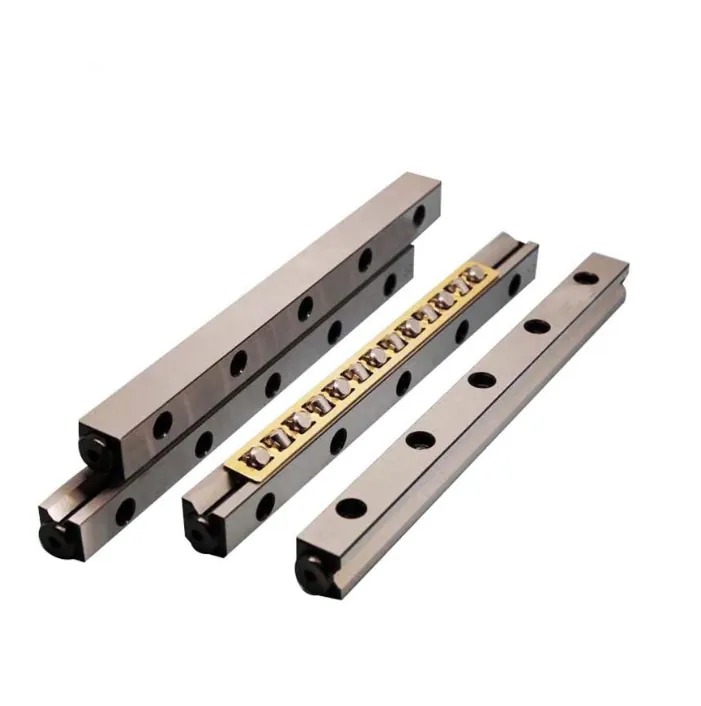
TEBAK Roller Linear Bearings VR1-20 VR2-30 VR3-50
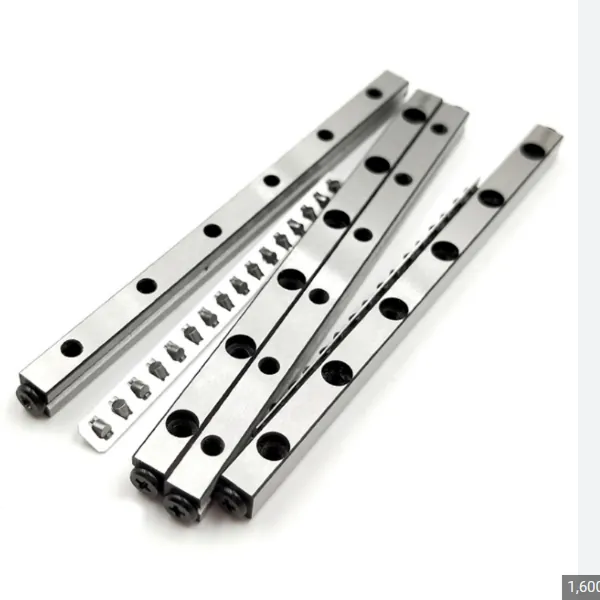
TEBAK Smooth Motion Precision Cross Roller Guides VR4
Interested in this product?
Send your details and we will respond within 24 hours.