
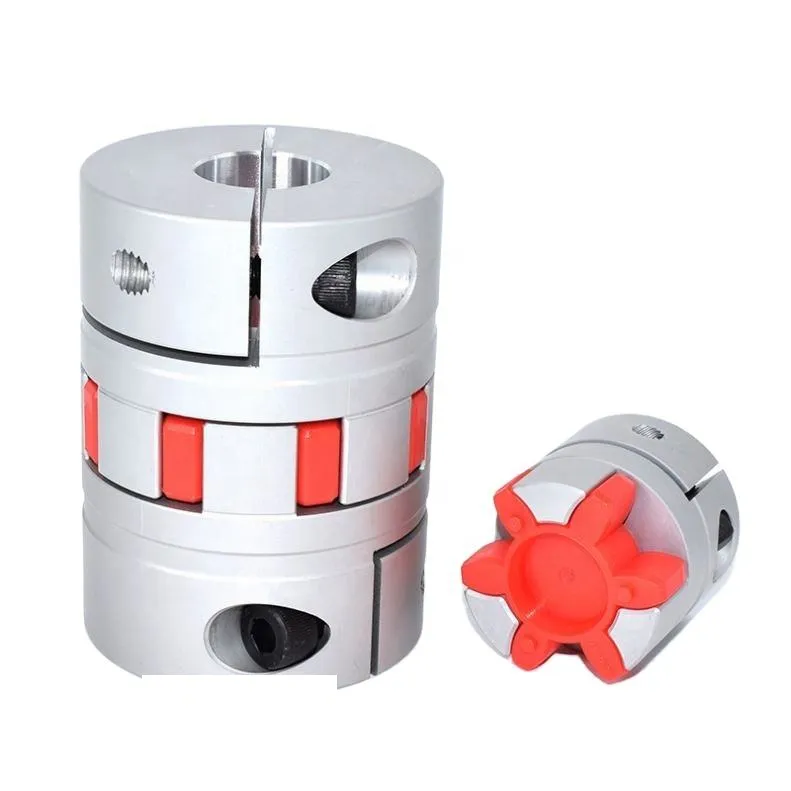
Rotex Spider Clamp Coupling, 6/8 mm Bore, 7075 Aluminium, for servo drives
Request pricing, MOQ and lead time for this product — we reply within 24 hours.
Construction
| Type | Flexible |
|---|---|
| Structure | Jaw / Spider |
| Material | Aluminum |
| Flexibility | Flexible |
| Surface treatment | Anodized |
| Body material | 7075 Hard Aluminium |
Size
| Bore diameter | 6 mm / 8 mm / 10 mm |
|---|---|
| Size | Customized |
| Length | Customized |
Performance
| Maximum speed | 1,000 rpm |
|---|
Supply
| Standard | Standard |
|---|---|
| Customized support | OEM |
Application
| Application | Industrial Equipment |
|---|---|
| Colour | Customized |
Values above are the manufacturer's published figures for this series. Anything not listed — dynamic load rating, straightness, preload class — is confirmed against the drawing at RFQ.
Description
Overview
A clamp hub spider coupling machined from 7075 hard aluminium, with bores of 6 mm, 8 mm and 10 mm, an anodised finish, and a rated speed of 1,000 rpm. The 7075 alloy is the point of this part: it is a high strength aluminium that machines to a clean thread and a stable slit, so a small hub can be closed onto a small shaft without the bore distorting or the clamp screw pulling through. Compared with the softer alloys commonly used for cheap couplings, a 7075 hub holds its clamp load after many cycles, which is what keeps a small shaft coupling free of the rotational play that appears when a hub relaxes.
Key Features
· Type: Flexible
· Bore diameter: 6 mm / 8 mm / 10 mm
· Maximum speed: 1,000 rpm
· Structure: Jaw / Spider
· Material: Aluminum
· Standard: Standard
· Supplied as a replacement part or as a production item for machine builders
· Material, tolerance and surface treatment confirmed against the drawing
Specifications
The parameter table above lists the values published for this item. Where a value depends on the machine it is going into, the drawing or the RFQ fixes it, and we confirm before production rather than after.
Application
The spider element between the two hubs is an elastomer star that sits in the jaw teeth and carries the drive. It is what makes the coupling flexible: the teeth of each hub press on alternate arms of the star, so the drive passes through the elastomer in compression. The star absorbs the small misalignment that remains after assembly, damps the torsional vibration that a direct metal joint would pass into the driven shaft, and electrically insulates the two shafts, which matters where a stray current path through a bearing would cause damage. Different star hardnesses change the balance between stiffness and damping, so the star can be chosen for a soft, shock absorbing drive or a stiffer, more precise one.
Bores of 6, 8 and 10 mm suit the shafts on small servos, steppers and lead screws, including the 6.35 mm quarter inch shaft found on many imported motors, which can be bored on request. The clamp screw closes a single slit in each hub, so the bore grips the shaft evenly around its circumference. On a small shaft the alternative, a set screw pressing on one point, tilts the hub slightly and produces runout, which is why clamp hubs are preferred on any axis where the coupling turns fast or where the shaft carries an encoder.
The anodised surface is a thin oxide layer that gives the aluminium a harder, more wear resistant skin and a colour that can be specified. Anodising does not build thickness the way paint does, so the bore and the jaw geometry stay within tolerance, and it does not chip off into a mechanism. The finish also resists the light corrosion that aluminium picks up in a workshop atmosphere, which keeps the appearance stable on machines that are visible to customers.
The 1,000 rpm rating reflects the size of the coupling rather than a limit of the design. Small couplings of this type are usually run well below their maximum on lead screw and small servo axes, and the practical limit is often the critical speed of the screw or the balance of the motor rather than the coupling. Where an axis has to run fast, the mass at the outside diameter is what matters, and the aluminium hub keeps that mass low.
Installation & Maintenance
Applications: the motor to lead screw joint on 3D printers, laser engravers and small CNC routers, the connection between a stepper and a small ball screw, encoder and sensor shafts, laboratory positioning stages, camera sliders, small conveyor and feeder drives, valve and damper actuators, and the drive joints on dispensing and labelling heads. The electrical insulation of the star is also useful on machines where the motor and the frame are at different potentials, and on test rigs where a ground loop through the shaft line would corrupt a measurement.
Installation on small shafts: clean the bore and the shaft, check the shaft diameter with a micrometer at the point where the hub will sit, slide the hub on until the shaft end is inside the bore by the engagement length, and tighten the clamp screw to the specified torque. Do not over-tighten a small screw in an aluminium hub, because the thread is the weakest part of the joint. With two hubs, set the axial gap between them to the value that lets the star sit in the teeth without being compressed, then check the runout of each hub with a dial indicator.
The star is the wear part, and that is a feature rather than a fault: it is inexpensive, it can be replaced without removing either hub from its shaft, and replacing it restores the coupling to its original condition. A star that has aged shows a set in the arms, a colour change, or cracks at the root; the symptom in the machine is a knock at each reversal or a growing backlash that is not in the screw. Keeping spare stars of the same hardness on the shelf is normal practice for a machine that runs continuously.
Ordering information: bore pair, star hardness, anodised colour, whether the coupling has to be electrically insulating, the maximum speed and the peak torque of the drive. Where the coupling sits close to a motor flange, give the outside diameter and the length available, and note which side the clamp screws must be accessible from. With the shaft diameters and the space envelope, the bore pair and the star can be fixed and a drawing issued.
This is a jaw coupling in the Rotex pattern, ordered as a spider coupling when the elastomer star is the point of the enquiry and as a clamp hub coupling when the fixing method is. It is not a plum coupling in name, though the geometry is the same family, and it does not have the zero backlash or the torsional stiffness of a disc coupling, because the star is designed to compress. On a small servo motor or stepper motor shaft the clamp hub and the low mass of the 7075 body are the two features that matter most.
Package & Lead Time
Standard export packing: each part is sleeved and cartoned, screws and rails are protected along their length, and larger assemblies travel crated. Lead time is confirmed with the quotation: standard sizes normally ship within 5 to 15 days of a confirmed drawing, custom parts against the agreed schedule. Minimum order is one piece, and sample orders are accepted before a production run.
Request a Quote
Send the model number or the drawing, with the shaft or rail size and the quantity you need, and we will reply with a quotation. For non-standard lengths, bore pairs, keyways and material changes we work from your drawing; bulk orders are quoted per quantity band and a sample can be supplied for approval.
Related components
Detail images
Questions buyers ask about this item
What bore sizes are available?
10mm.
What speed is it rated for?
1,000 rpm.
Can the bore be machined to my shaft?
Yes. Bore pairs, keyways and clamp sizes are machined to the drawing, including mixed bores on the two hubs.
Is the torque rating fixed?
Torque is quoted for the body and bore you order and is confirmed on the drawing.
Related products
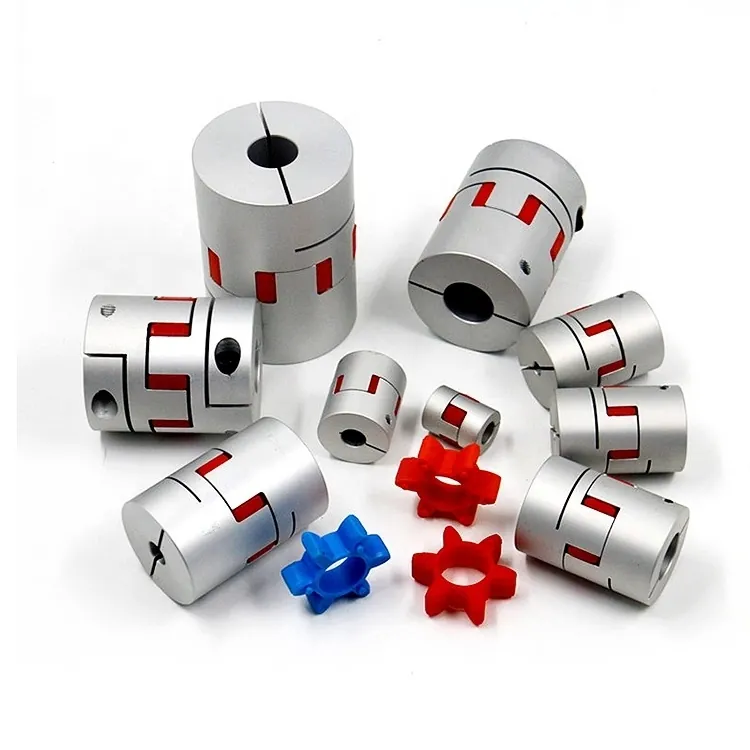
TEBAK High-strength Flexible Spider Jaw Type Clamping
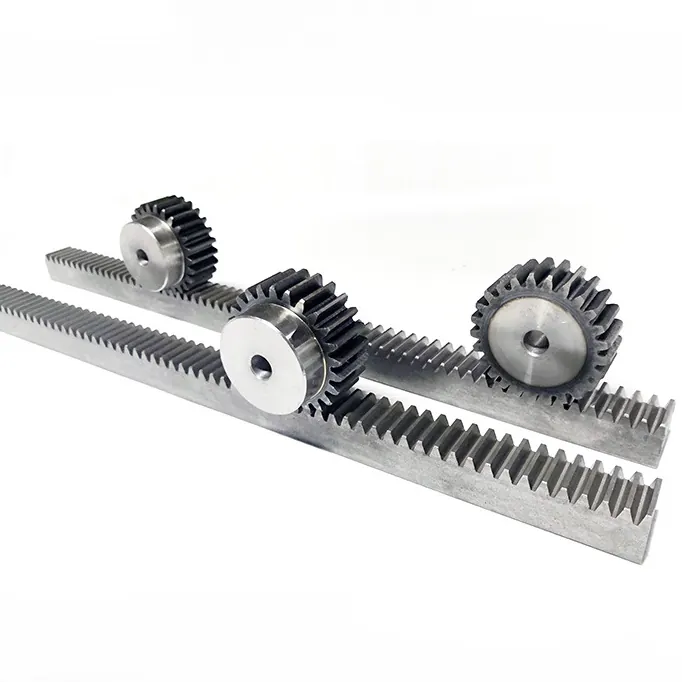
TEBAK Gear Rack, Straight Tooth M1 M2 M3 M4 M5 M6 Custom
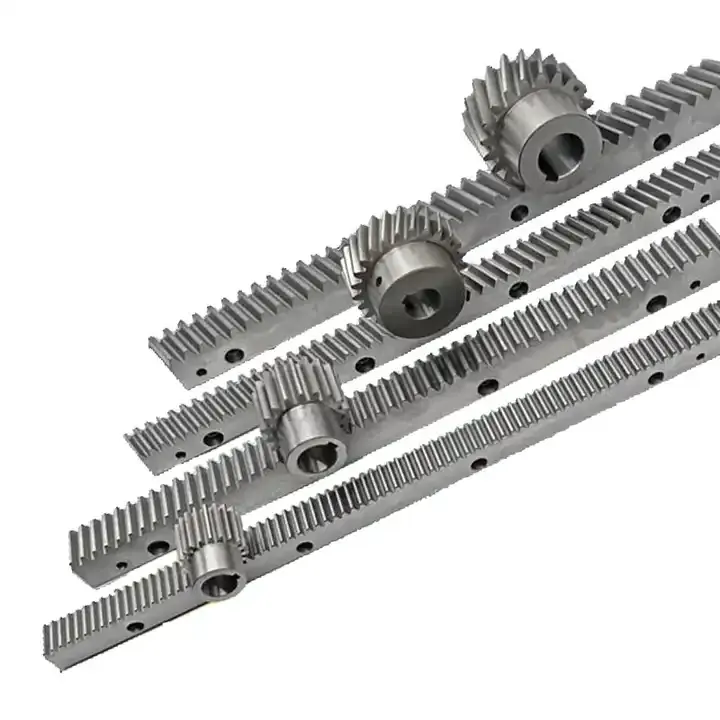
TEBAK Gear Rack, European Standard, Module Cut to Order
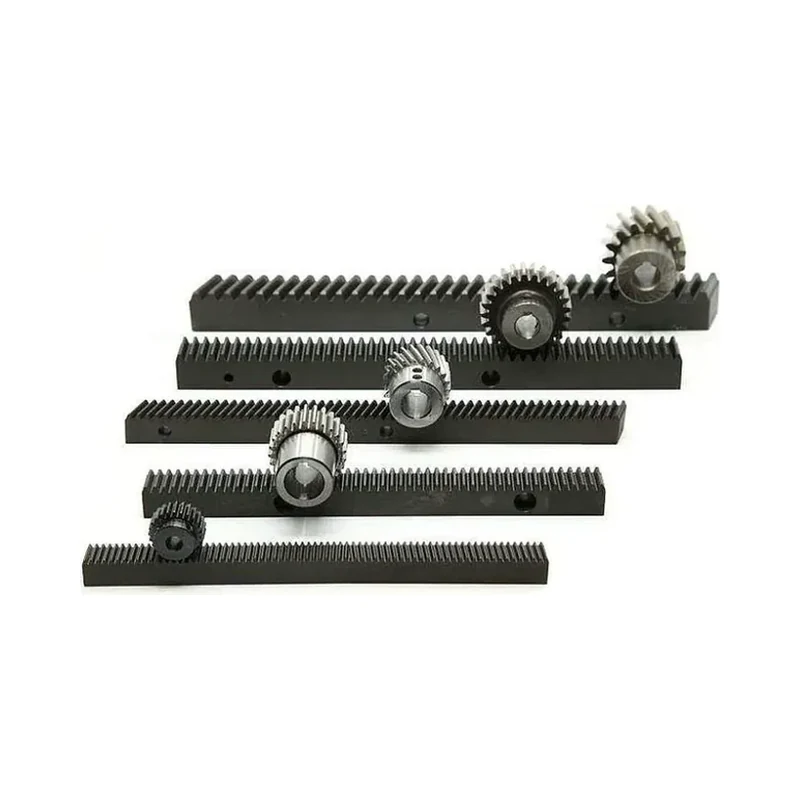
TEBAK Black Oxide Steel Straight Helical Gear Rack
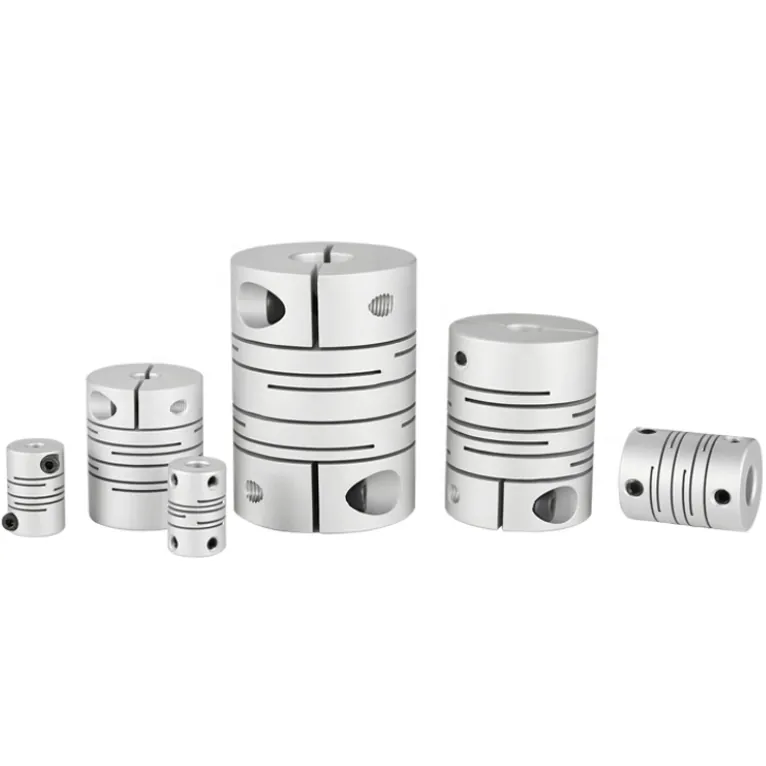
TEBAK Coupling, Grooved Parallel Line Coupler Aluminum
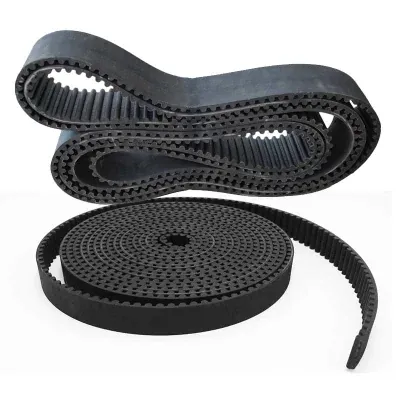
TEBAK Timing Belt, Open End Rubber or PU Industrial Belt
Interested in this product?
Send your details and we will respond within 24 hours.