
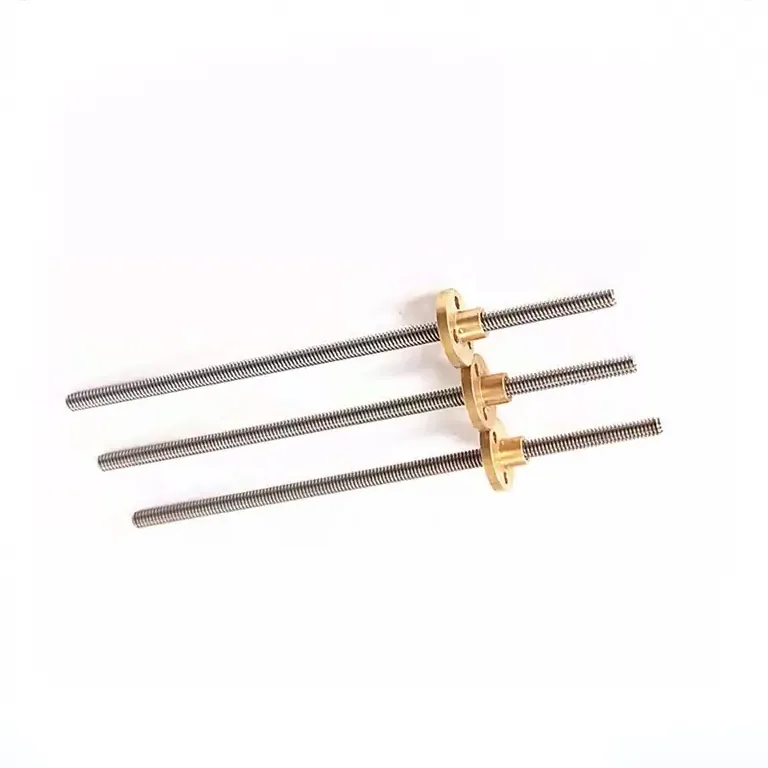
Precision Lead Screw, dia 6 mm, for CNC and 3D printers
Request pricing, MOQ and lead time for this product — we reply within 24 hours.
Dimensions and configuration
| Screw diameter | 6 mm |
|---|
Material and surface treatment
| Surface coating | Zinc-plated,nickel plated,hard chromium plated,fluorine coated,tungsten disulfide,black chorme plated |
|---|---|
| Surface treatment | Custom lead nut and shaft end machining Various |
Accuracy and running characteristics
| Clearance | 7e,higher precision is available upon request |
|---|
Supply conditions
| Customisation | Customized nuts and end machining are available upon drawing |
|---|---|
| Warranty | 1.5 year |
| Place of origin | Jiangsu, China |
Values above are the manufacturer's published figures for this series. Anything not listed — dynamic load rating, straightness, preload class — is confirmed against the drawing at RFQ.
Description
Overview
This is a sliding contact screw drive: the nut runs on the thread with a film of lubricant between them rather than on recirculating balls. A lead screw of this type is the standard choice for slower axes, for holding loads that must not drop when the motor is off, and for machines where the cost of a ball screw cannot be justified. The thread is produced on the shaft and the nut is matched to it, so the pair is normally supplied and replaced together.
Key Features
· Warranty: 1.5 year
· Weight (kg): 0.8
· Video outgoing-inspection: Provided
· Machinery test report: Provided
· Core components: Motor
· Manufacturing process: Rolled Thread
· Supplied as a replacement part or as a production item for machine builders
· Material, tolerance and surface treatment confirmed against the drawing
Specifications
The parameter table above lists the values published for this item. Where a value depends on the machine it is going into, the drawing or the RFQ fixes it, and we confirm before production rather than after.
Application
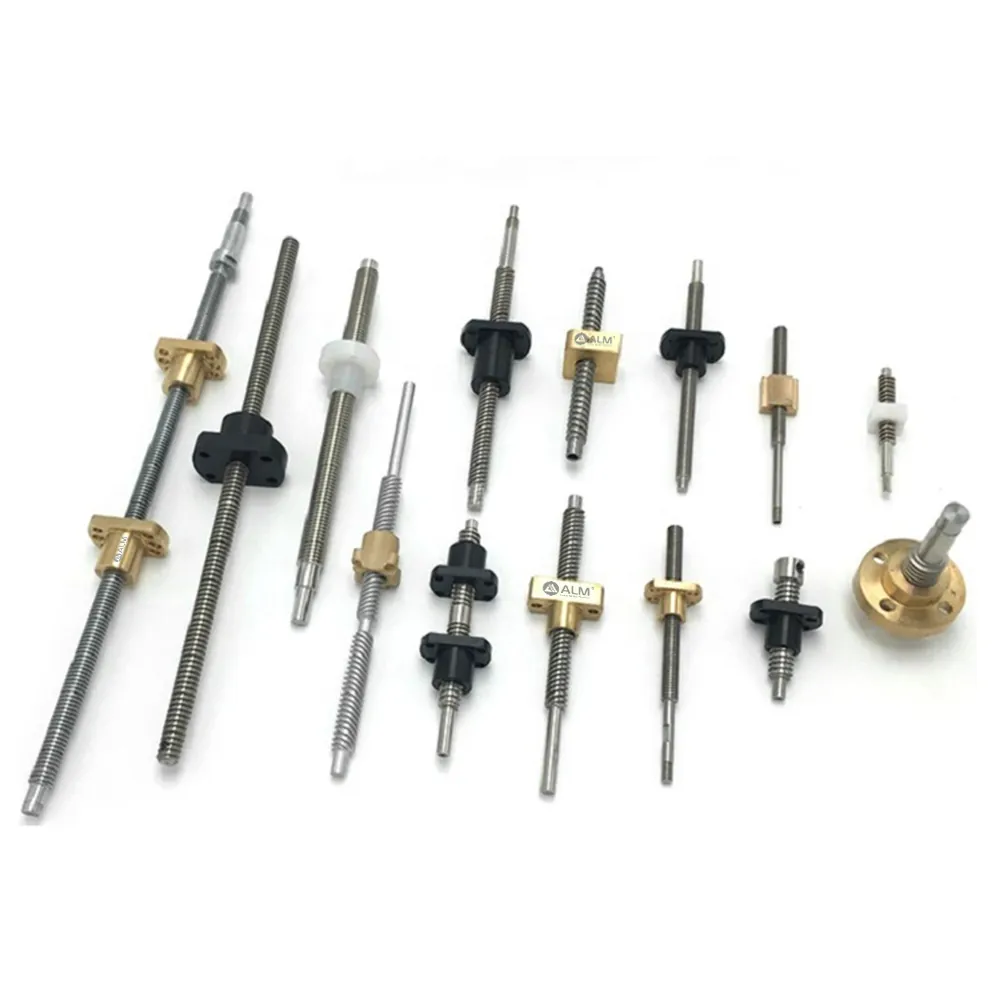
Shaft material: ASTM1045, SUS303, SUS304, SS316, SS316L. Nut material: POM, Brass, Bronze, PEEK, nylon. Manufacturing process: Rolled Thread.
The shaft materials listed for this range are ASTM 1045 carbon steel and the stainless grades 303, 304, 316 and 316L. Carbon steel is the usual choice for general machinery because it is stiff and takes a rolled thread well; the stainless grades are specified where the screw will see moisture, wash down or a corrosive atmosphere, and 316L is the grade for the harshest of those. Surface treatment such as black chrome plating is available where wear resistance or appearance matters, and it also gives some protection against rust on a carbon steel shaft.
The nut is the half of the drive that wears, and the material decides how the pair behaves. POM and nylon nuts run quietly and need little lubrication, which suits light loads and clean environments; brass and bronze carry more load and tolerate higher temperatures, at the cost of needing grease; PEEK is chosen for high temperature and for chemical resistance, and it is the most expensive of the group. A polymer nut should not be run dry at high load, because the surface will overheat before it wears visibly.
Grade and clearance work together and should be specified together. The thread class sets how much material is on the flanks, and the nut fit sets how much of that becomes clearance. On a machine that has a closed loop with a linear encoder, the screw only has to transmit force and the class can be relaxed; on an open loop machine the class and the clearance both appear in the finished part, so they are worth paying for.
Clearance: 7e, higher precision is available upon request. Surface treatment: Black chrome plated and so on.
Installation & Maintenance
Efficiency of a sliding screw is well below that of a ball screw, and that is the price of self-locking and simplicity. The lost energy becomes heat at the nut, so the load and the speed together set the temperature of the nut rather than the load alone. A screw that is run at high load and high speed with a polymer nut will reach its limit on temperature first, and the symptom is a squeal or a softening of the nut face before any visible wear.
The coupling between motor and screw has to pass torque without loading the screw bearing, so a flexible coupling is used and the two shafts are indicated before it is tightened. The axial position of the screw should be set at the same time: a screw that is pushed or pulled by its coupling runs with a preload error or with end float, and both show up as position error that no amount of tuning will remove. After the first hours of running, re-check the bearing preload and the coupling screws.
Maintenance of a lead screw axis is mostly inspection. Look at the thread for a polished band where the nut spends most of its time, which shows the working zone; check the nut for axial play by rocking the driven part with the motor locked; and listen for a change in pitch as the nut passes a particular point, which points to a damaged section of thread. A nut with measurable play can often be adjusted or replaced on its own, without touching the screw.
Lead screws also carry the adjusting movements of instruments and test equipment, where the requirement is fine resolution rather than speed. A fine lead with a stepper motor gives small steps and high force, and the nut can be preloaded to remove most of the play. The same combination appears on optical mounts, on sampling stages, and on the manual adjustment of machine tools where a handwheel drives a screw through a graduated dial.
Ordering detail that prevents a wrong part: the hand of the thread, because a left hand screw is not obvious from a photograph; the position of the thread on the shaft, since a screw threaded over its whole length is not the same part as one threaded between two journals; and whether the nut is flanged or cylindrical. A sketch with the dimensions marked is worth more than a paragraph of description, and it removes the ambiguity that causes most returns.
Package & Lead Time
Standard export packing: each part is sleeved and cartoned, screws and rails are protected along their length, and larger assemblies travel crated. Lead time is confirmed with the quotation: standard sizes normally ship within 5 to 15 days of a confirmed drawing, custom parts against the agreed schedule. Minimum order is one piece, and sample orders are accepted before a production run.
Request a Quote
Send the model number or the drawing, with the shaft or rail size and the quantity you need, and we will reply with a quotation. For non-standard lengths, bore pairs, keyways and material changes we work from your drawing; bulk orders are quoted per quantity band and a sample can be supplied for approval.
Related components
Detail images
Related products
TEBAK Precision Lead Screw, dia 12 mm
TEBAK T20–T25 Lead Screw, dia 25 mm
TEBAK Miniature T5–T10 Lead Screw, dia 10 mm
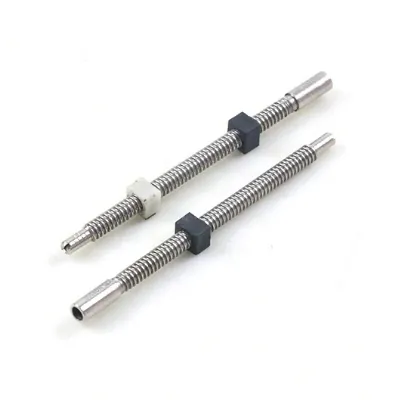
TEBAK Stainless Lead Screw, lead 8 mm
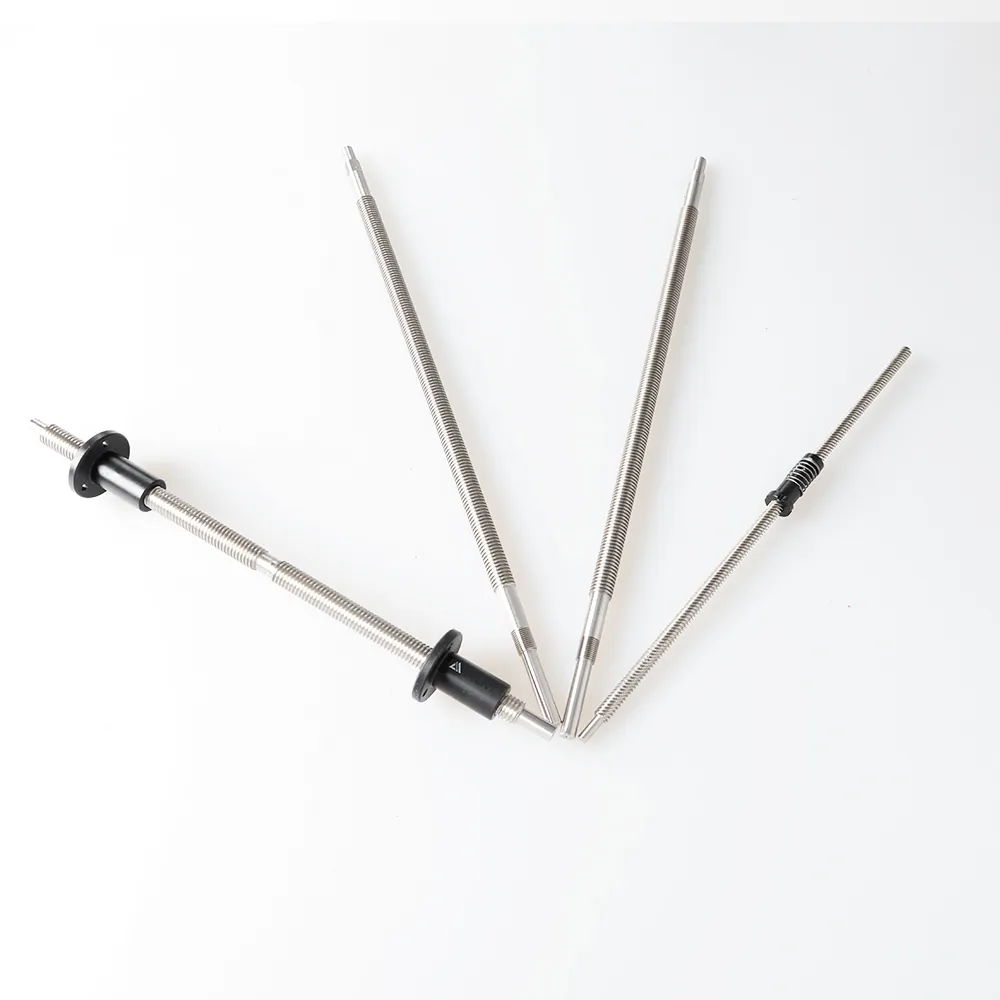
TEBAK ASTM1045,SUS303,SUS304 — T8–T16 Lead Screw, lead
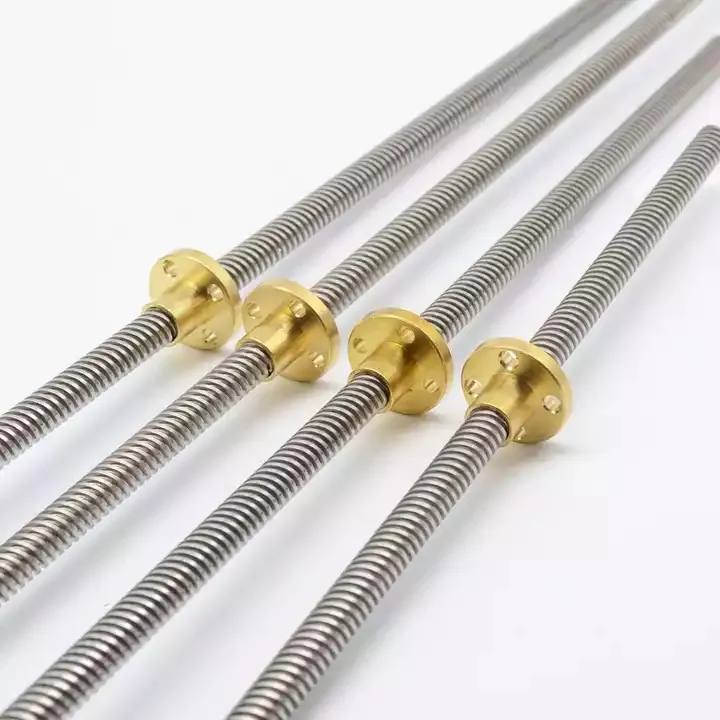
TEBAK Stainless Lead Screw, dia 36 mm
Interested in this product?
Send your details and we will respond within 24 hours.