
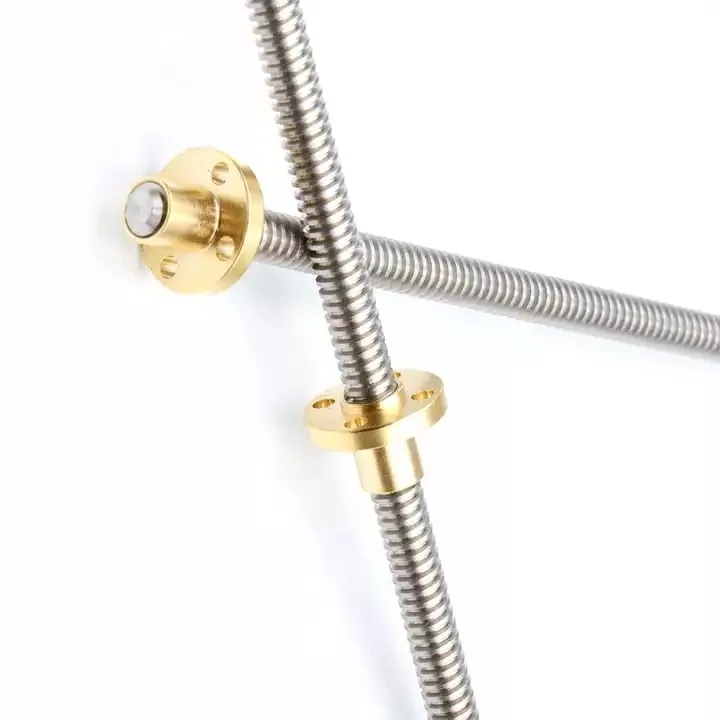
Lead Screw, Brass POM PEEK PPS Nylon Nut 14mm, for CNC and 3D printers
Request pricing, MOQ and lead time for this product — we reply within 24 hours.
Material and surface treatment
| Surface coating | Zinc-plated,nickel plated,hard chromium plated,fluorine coated,tungsten disulfide,black chorme plated |
|---|---|
| Surface treatment | Custom lead nut and shaft end machining Various |
Accuracy and running characteristics
| Clearance | 7e,higher precision is available upon request |
|---|
Supply conditions
| Customisation | Customized nuts and end machining are available upon drawing |
|---|---|
| Warranty | 1.5 year |
| Place of origin | Jiangsu, China |
Values above are the manufacturer's published figures for this series. Anything not listed — dynamic load rating, straightness, preload class — is confirmed against the drawing at RFQ.
Description
Overview
The working principle of a lead screw is a screw thread used as an inclined plane: the nut converts torque into thrust, and the mechanical advantage comes from the lead being much smaller than the circumference of the shaft. That is why a lead screw can hold a vertical load without a brake and why it is chosen on machines where a simple, self-locking axis is wanted. The trade is friction and efficiency, and the nut material is what decides how much of each.
Key Features
· Warranty: 1.5 year
· Weight (kg): 0.8
· Video outgoing-inspection: Provided
· Machinery test report: Provided
· Core components: Motor
· Manufacturing process: Rolled Thread
· Supplied as a replacement part or as a production item for machine builders
· Material, tolerance and surface treatment confirmed against the drawing
Specifications
The parameter table above lists the values published for this item. Where a value depends on the machine it is going into, the drawing or the RFQ fixes it, and we confirm before production rather than after.
Application
Shaft material: ASTM1045, SUS303, SUS304, SS316, SS316L. Nut material: POM, Brass, Bronze, PEEK, nylon. Manufacturing process: Rolled Thread.
Material choice is driven by the environment and by the nut pair. A carbon steel shaft with a bronze nut is the classic combination for dry or lightly lubricated industrial axes; a stainless shaft with a polymer nut suits clean rooms, food equipment and instruments, and reduces the risk of galvanic corrosion at the nut. The listing covers 1045 and the 300 series stainless grades, and the nut materials listed are POM, brass, bronze, PEEK and nylon, so the pair can be matched to the load, the temperature and the lubrication available.
Nut choices in this range cover the usual machine building options: a plain polymer nut for light, quiet movement, a bronze nut for load and temperature, and a PEEK nut for aggressive environments. The nut also sets the mounting style, because a flange nut bolts to the moving part while a cylindrical nut sits in a housing. Whichever is used, the nut should be aligned to the screw rather than forced onto it, because a nut that is running at an angle wears on one side and produces a periodic error once per revolution.
The accuracy of a lead screw is described by a class that combines the permitted error over a measured length with the permitted variation in the thread. A class such as 7e is the standard commercial grade used on general machinery, and higher classes are available on request. What matters in practice is the lead error over the travel the machine actually uses: a screw that is accurate over 300 mm may still show a larger cumulative error over a metre, and a machine that corrects position with a linear scale does not depend on the screw for accuracy at all.
Clearance: 7e, higher precision is available upon request. Surface treatment: Black chrome plated and so on.
Installation & Maintenance
Efficiency of a sliding screw is well below that of a ball screw, and that is the price of self-locking and simplicity. The lost energy becomes heat at the nut, so the load and the speed together set the temperature of the nut rather than the load alone. A screw that is run at high load and high speed with a polymer nut will reach its limit on temperature first, and the symptom is a squeal or a softening of the nut face before any visible wear.
Fitting begins with the bearings, not the nut. Support the screw in its bearings, check that it turns freely by hand, and indicate the journal and the flange face before anything else is attached. Then bring the nut into line with the screw and bolt it to the moving part with the screws just nipped, run the axis through its full travel to let the nut find its line, and only then tighten. A nut that is bolted hard before the line is checked will pull the screw into a bend that shows as a tight spot at one end of the travel.
Cleaning and re-greasing at a fixed interval is the whole maintenance story on most machines. Wipe the thread with a lint-free cloth, remove the old grease with a solvent that does not attack the nut material, and re-apply the specified grease thinly and evenly. Do not mix grease types, because some thickeners are incompatible and the mixture can harden. On a machine that runs intermittently, run the axis through its full travel after greasing so the film is distributed over the whole working length.
Typical applications are the axes of machines that move slowly and hold position: 3D printers and laser engravers, desktop CNC routers, laboratory and medical positioning stages, camera and sensor sliders, valve actuators, packaging and labelling machines, and the adjusting axes on woodworking and metalworking equipment. In each case the lead screw is chosen because it holds without a brake, runs quietly, and costs less than a ball screw of the same size.
To quote a lead screw, the useful information is the nominal diameter, the lead, the overall length and the thread length, the material of the shaft and of the nut, the accuracy class and the clearance, and a drawing of the end machining. Where the end detail is not fixed yet, say which bearing and which coupling will be used and the journals can be proposed. Quantity and the delivery date complete the picture.
Package & Lead Time
Standard export packing: each part is sleeved and cartoned, screws and rails are protected along their length, and larger assemblies travel crated. Lead time is confirmed with the quotation: standard sizes normally ship within 5 to 15 days of a confirmed drawing, custom parts against the agreed schedule. Minimum order is one piece, and sample orders are accepted before a production run.
Request a Quote
Send the model number or the drawing, with the shaft or rail size and the quantity you need, and we will reply with a quotation. For non-standard lengths, bore pairs, keyways and material changes we work from your drawing; bulk orders are quoted per quantity band and a sample can be supplied for approval.
Related components
Detail images
Related products
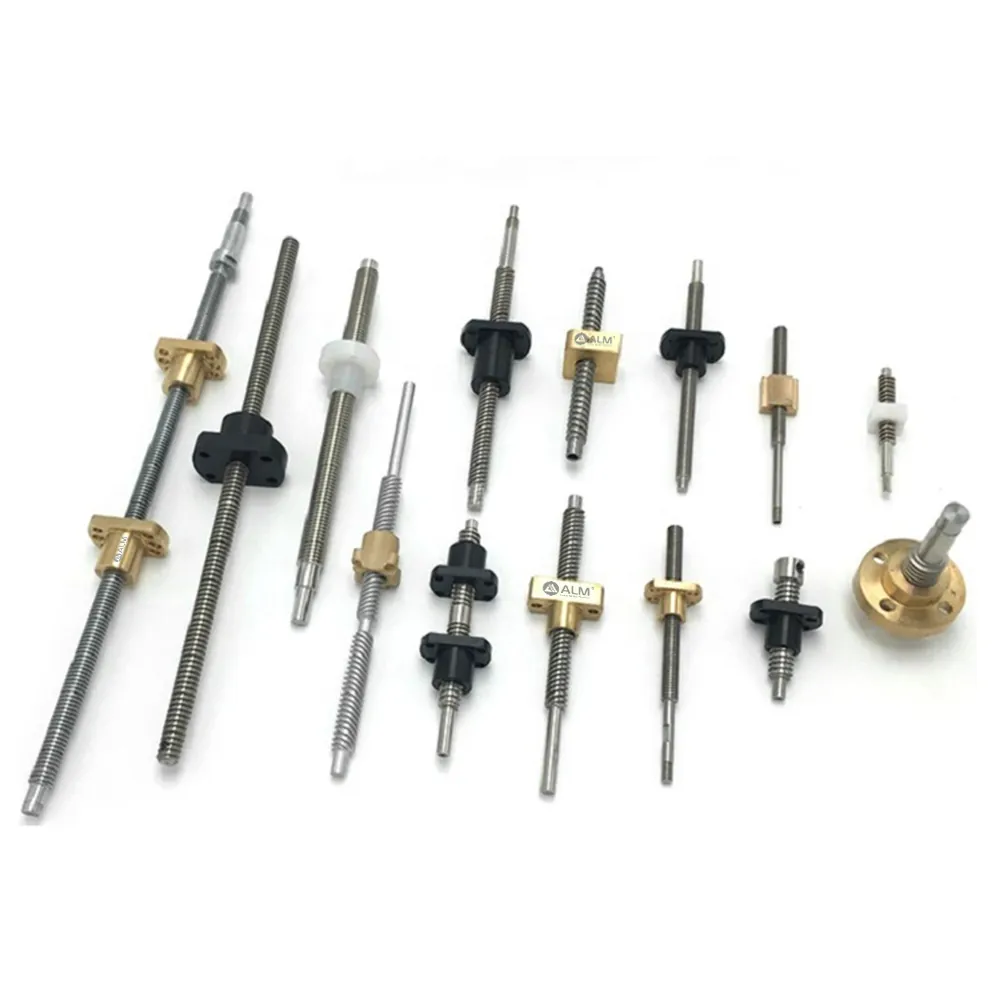
TEBAK Precision Lead Screw, dia 12 mm
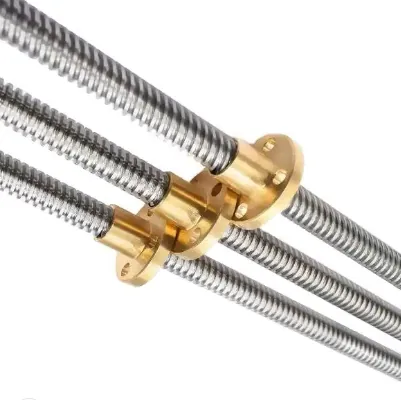
TEBAK T20–T25 Lead Screw, dia 25 mm
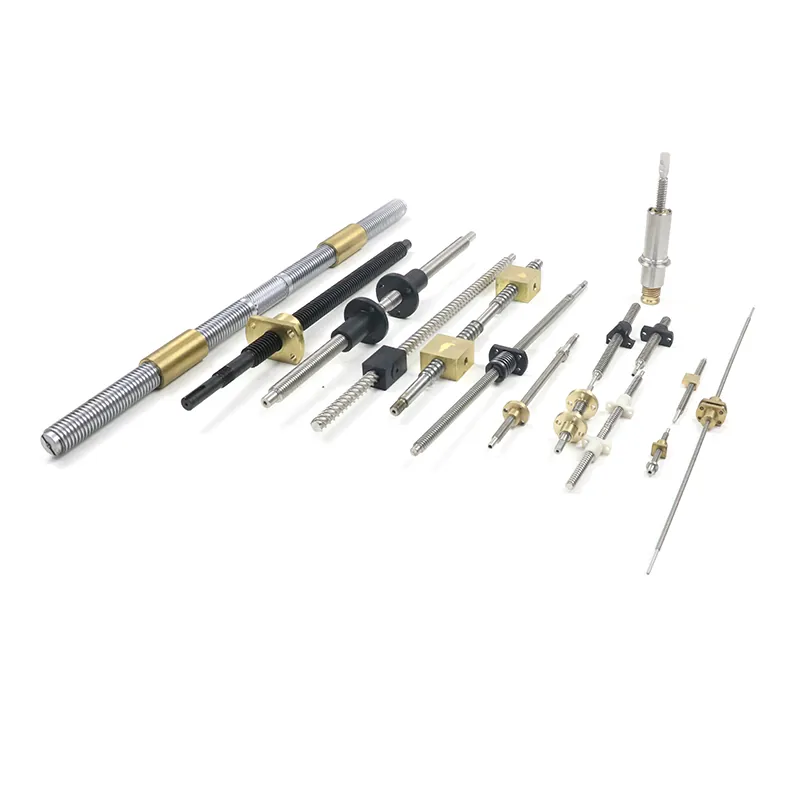
TEBAK Miniature T5–T10 Lead Screw, dia 10 mm
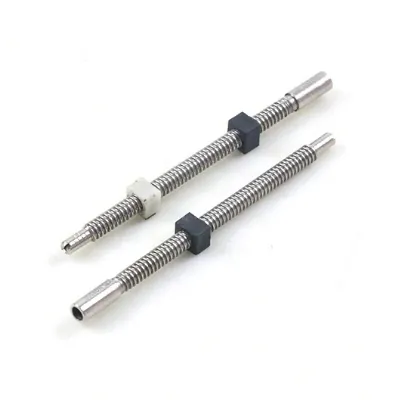
TEBAK Stainless Lead Screw, lead 8 mm
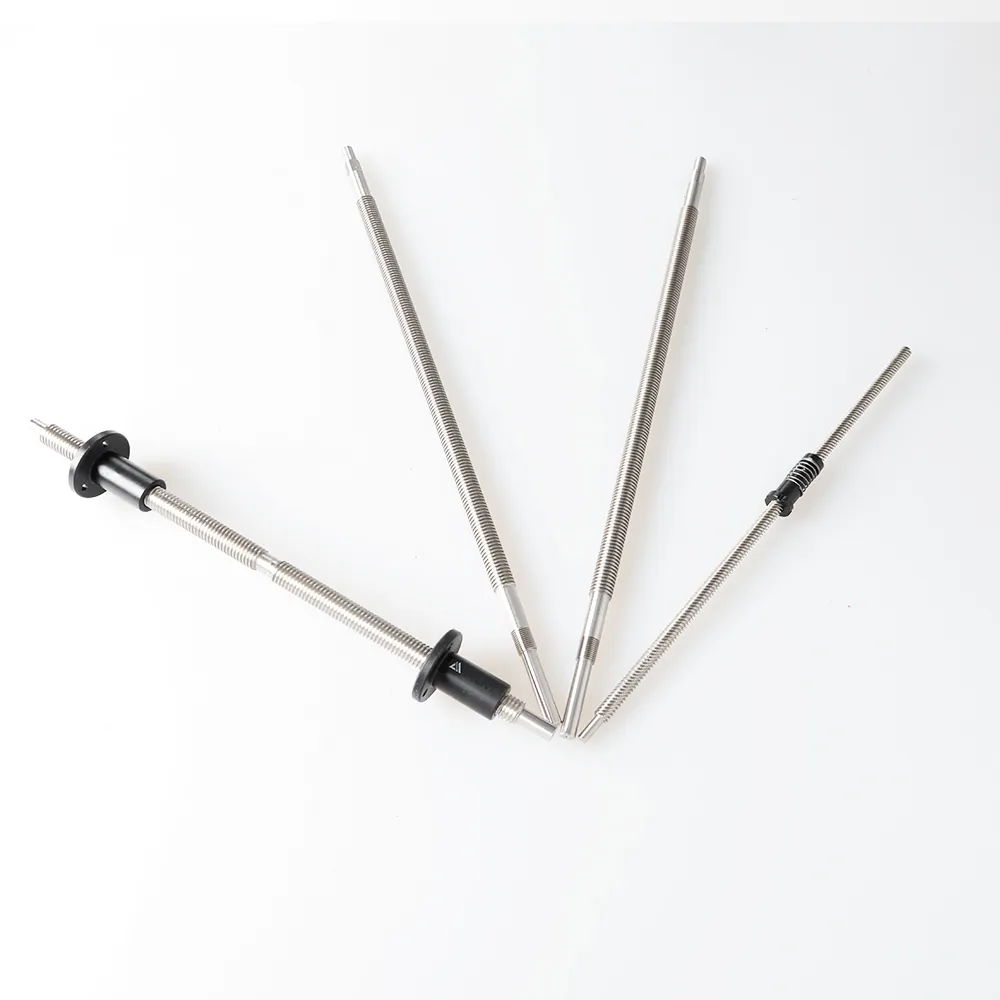
TEBAK ASTM1045,SUS303,SUS304 — T8–T16 Lead Screw, lead
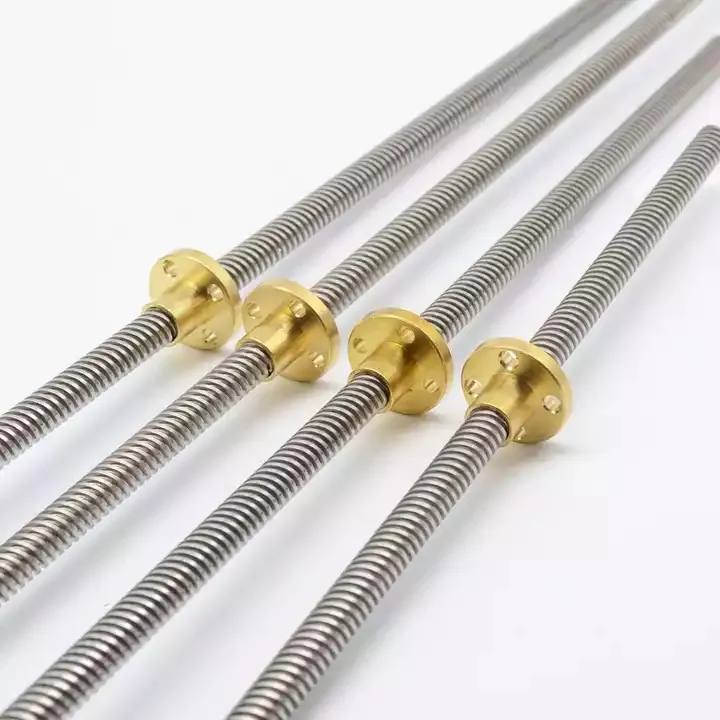
TEBAK Stainless Lead Screw, dia 36 mm
Interested in this product?
Send your details and we will respond within 24 hours.