
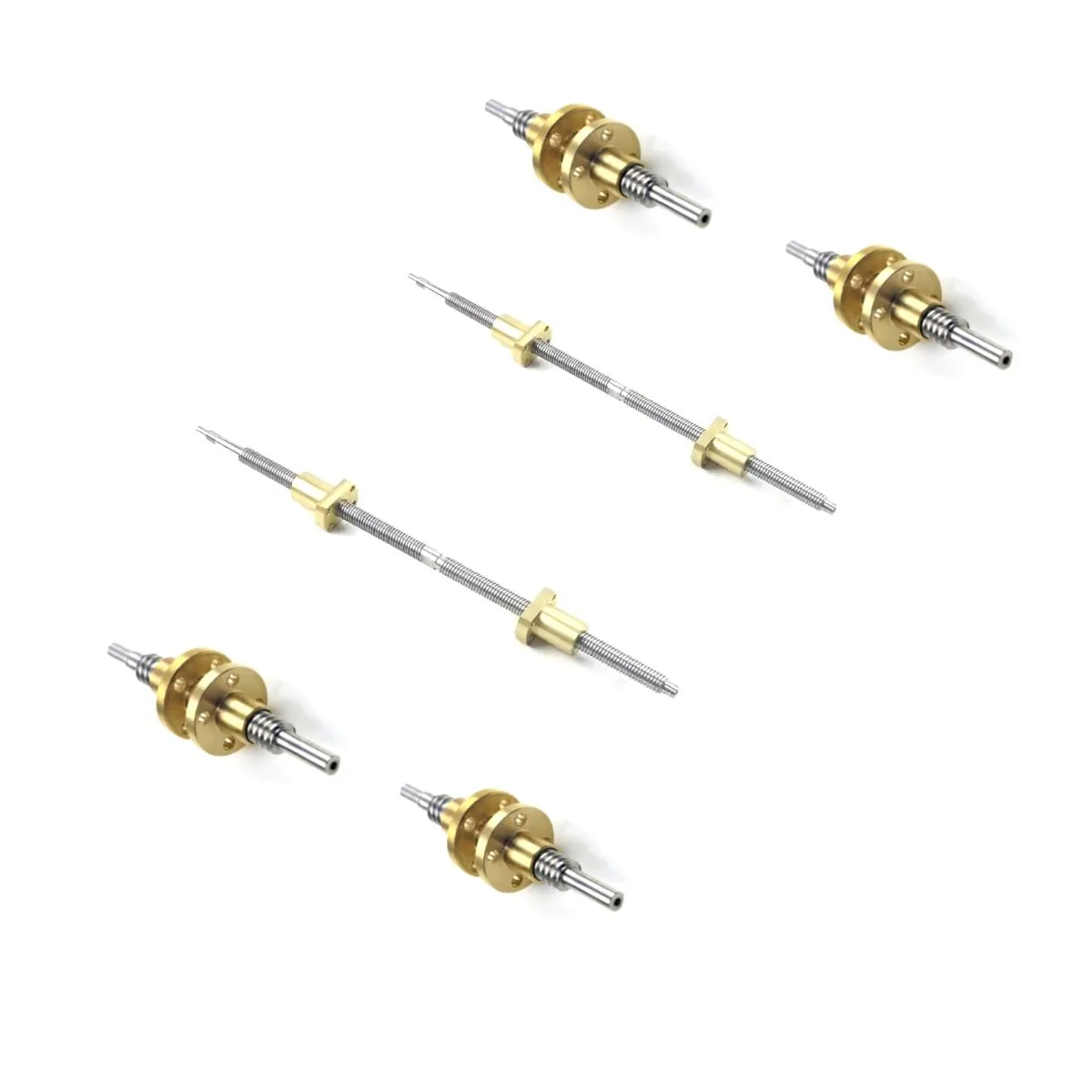
Bi-directional Lead Screw, dia 6 mm, for CNC and 3D printers
Request pricing, MOQ and lead time for this product — we reply within 24 hours.
Dimensions and configuration
| Screw diameter | 6 mm |
|---|
Material and surface treatment
| Surface coating | Zinc-plated,nickel plated,hard chromium plated,fluorine coated,tungsten disulfide,black chorme plated |
|---|---|
| Surface treatment | Custom lead nut and shaft end machining Various |
Accuracy and running characteristics
| Clearance | 7e,higher precision is available upon request |
|---|
Supply conditions
| Customisation | Customized nuts and end machining are available upon drawing |
|---|---|
| Warranty | 1.5 year |
| Place of origin | Jiangsu, China |
| MOQ | 1 Set |
Values above are the manufacturer's published figures for this series. Anything not listed — dynamic load rating, straightness, preload class — is confirmed against the drawing at RFQ.
Description
Overview
A lead screw turns rotation into straight-line movement through a threaded shaft and a nut that travels along it. The thread form, the diameter and the lead set the character of the drive: a fine lead gives more force for a given motor torque and finer positioning steps, while a coarse lead gives speed. The screw in this listing is supplied as a shaft with the thread rolled or cut over the working length, with the ends machined to suit the bearing supports and the drive coupling of the machine it goes into.
Key Features
· Warranty: 1.5 year
· Weight (kg): 0.8
· Video outgoing-inspection: Provided
· Machinery test report: Provided
· Core components: Motor
· Manufacturing process: Rolled Thread
· Supplied as a replacement part or as a production item for machine builders
· Material, tolerance and surface treatment confirmed against the drawing
Specifications
The parameter table above lists the values published for this item. Where a value depends on the machine it is going into, the drawing or the RFQ fixes it, and we confirm before production rather than after.
Application
Shaft material: ASTM1045, SUS303, SUS304, SS316, SS316L. Nut material: POM, Brass, Bronze, PEEK, nylon. Manufacturing process: Rolled Thread.
Thread production is by rolling, which forms the thread by displacing material rather than cutting it. A rolled thread has a continuous grain flow that follows the thread profile, so the surface is harder and the thread is stronger in fatigue than a cut one, and no material is removed from the shaft. Rolling also leaves a smoother flank, which reduces friction in the nut. Where a thread has to be cut, for example on a very coarse lead or a special profile, the shaft is machined instead and the surface finish then depends on the finishing pass.
Backlash between the nut and the thread is the quantity that decides how the axis behaves on a reversal. A small clearance keeps the drive free but shows as lost motion when the direction changes; an anti-backlash nut removes that clearance with a spring or a split nut, at the cost of more friction and faster wear. On a vertical axis a small amount of clearance is acceptable because gravity keeps the nut loaded on the same flank, while on a horizontal axis that reverses under load the clearance appears directly as position error.
Grade and clearance work together and should be specified together. The thread class sets how much material is on the flanks, and the nut fit sets how much of that becomes clearance. On a machine that has a closed loop with a linear encoder, the screw only has to transmit force and the class can be relaxed; on an open loop machine the class and the clearance both appear in the finished part, so they are worth paying for.
Clearance: 7e, higher precision is available upon request. Surface treatment: Black chrome plated and so on.
Installation & Maintenance
A lead screw is limited by three things before it is limited by strength: buckling of a long shaft in compression, whip at speed, and wear of the nut. Buckling depends on the diameter and on how the screw is supported at each end, with a fixed-fixed arrangement carrying several times the load of a simple support at the same length. Whip depends on length, diameter and speed, and it sets a maximum rpm that falls quickly as the screw gets longer, so a long screw is a slow screw whatever the motor can do.
Fitting begins with the bearings, not the nut. Support the screw in its bearings, check that it turns freely by hand, and indicate the journal and the flange face before anything else is attached. Then bring the nut into line with the screw and bolt it to the moving part with the screws just nipped, run the axis through its full travel to let the nut find its line, and only then tighten. A nut that is bolted hard before the line is checked will pull the screw into a bend that shows as a tight spot at one end of the travel.
Lubrication is the difference between a lead screw that lasts years and one that wears out in months. A bronze nut wants a film of grease on the thread, renewed at the interval the duty demands; a polymer nut wants little or nothing, but it does want the thread clean. Dust is the enemy of both: a dry dusty thread acts like a lap and wears the nut from the inside. Bellows, a wiper or a simple cover over the exposed thread is cheap insurance on any machine that makes chips or dust.
Where the axis has to hold a load with the motor off, a lead screw is often the simplest answer: the thread angle of a fine lead makes the drive self-locking, so a vertical axis stays where it is put. That is why lead screws appear on lift and adjustment mechanisms, on the Z axis of small machines, on hospital beds and furniture actuators, and on any mechanism where a person sets a position by hand and expects it to stay.
To quote a lead screw, the useful information is the nominal diameter, the lead, the overall length and the thread length, the material of the shaft and of the nut, the accuracy class and the clearance, and a drawing of the end machining. Where the end detail is not fixed yet, say which bearing and which coupling will be used and the journals can be proposed. Quantity and the delivery date complete the picture.
Package & Lead Time
Standard export packing: each part is sleeved and cartoned, screws and rails are protected along their length, and larger assemblies travel crated. Lead time is confirmed with the quotation: standard sizes normally ship within 5 to 15 days of a confirmed drawing, custom parts against the agreed schedule. Minimum order is one piece, and sample orders are accepted before a production run.
Request a Quote
Send the model number or the drawing, with the shaft or rail size and the quantity you need, and we will reply with a quotation. For non-standard lengths, bore pairs, keyways and material changes we work from your drawing; bulk orders are quoted per quantity band and a sample can be supplied for approval.
Related components
Detail images
Questions buyers ask about this item
What screw diameter is this?
6 mm
What is the minimum order quantity?
1 Set
Related products
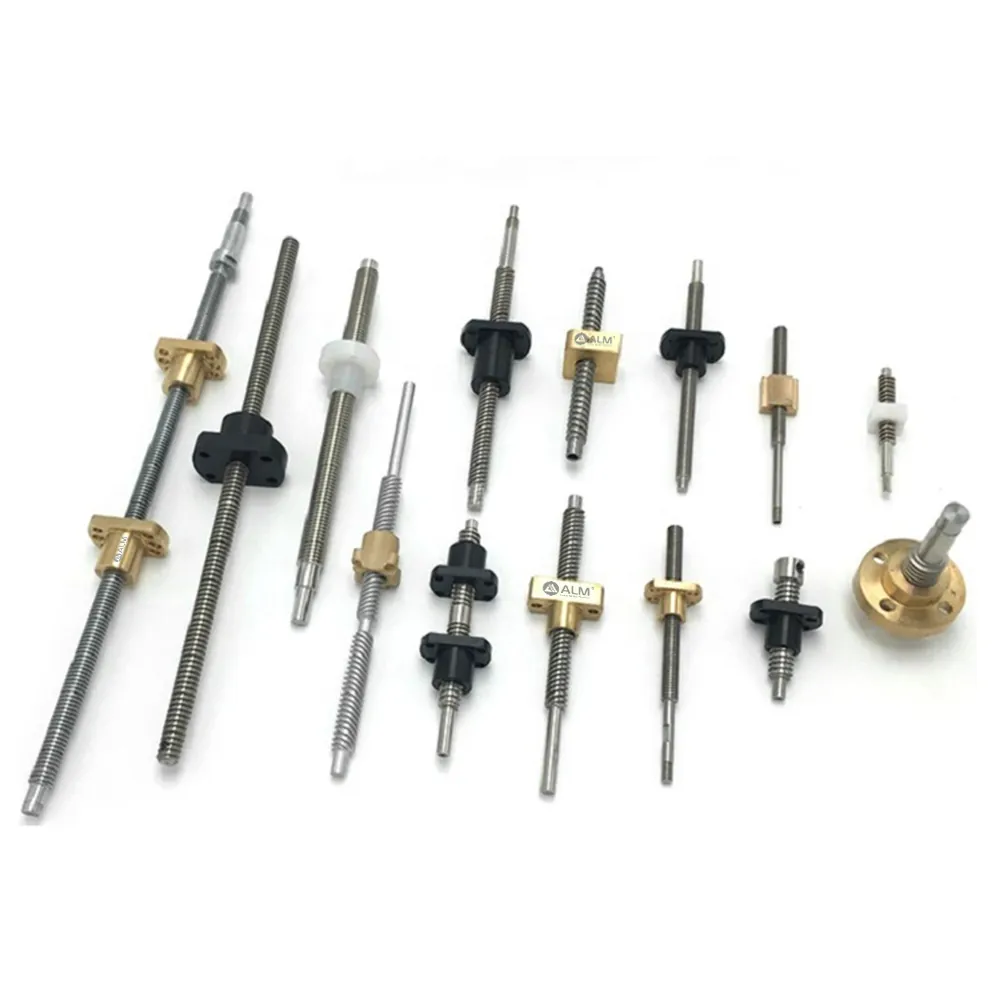
TEBAK Precision Lead Screw, dia 12 mm
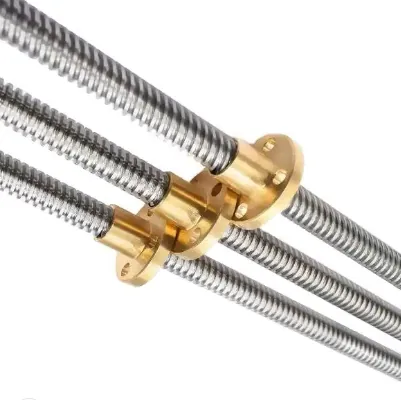
TEBAK T20–T25 Lead Screw, dia 25 mm
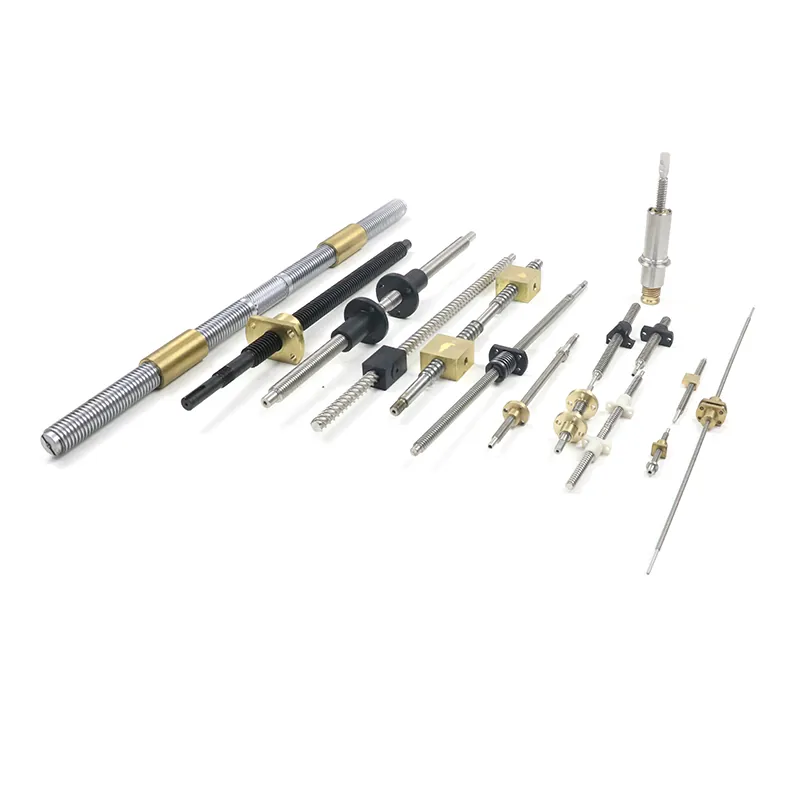
TEBAK Miniature T5–T10 Lead Screw, dia 10 mm
TEBAK Stainless Lead Screw, lead 8 mm
TEBAK ASTM1045,SUS303,SUS304 — T8–T16 Lead Screw, lead
TEBAK Stainless Lead Screw, dia 36 mm
Interested in this product?
Send your details and we will respond within 24 hours.